
Have you ever gone to bed feeling completely exhausted, only to find yourself wide awake a few minutes later?
You turn to one side, then the other. You check your phone. You look at the clock. You tell yourself that you really need to sleep because tomorrow is another busy day.
And somehow, the more you try to fall asleep, the harder it becomes.
If this sounds familiar, you are not alone.
Sleep is one of the most important parts of our overall health, yet it is something many of us unintentionally neglect. Long working hours, stress, irregular meal timings, excessive screen use, caffeine and everyday responsibilities can all interfere with our natural sleep routine.
The good news? Improving your sleep does not always require expensive products, complicated routines or immediate dependence on sleep supplements.
Sometimes, small and consistent lifestyle changes can make a meaningful difference.
In this guide, we will explore 12 natural ways to sleep better, understand why sleep becomes difficult, discuss foods and daily habits that may affect sleep quality, and explain when it is important to speak with a healthcare professional.
Let’s start with something simple.
Why Is Getting Good Sleep So Important?
Think about how you feel after a genuinely good night’s sleep.
You wake up feeling refreshed. Your mind feels clearer. You are more patient, focused and ready to handle the day.
Now compare that with a morning after several hours of interrupted sleep.
You may feel tired, irritated, distracted or less motivated.
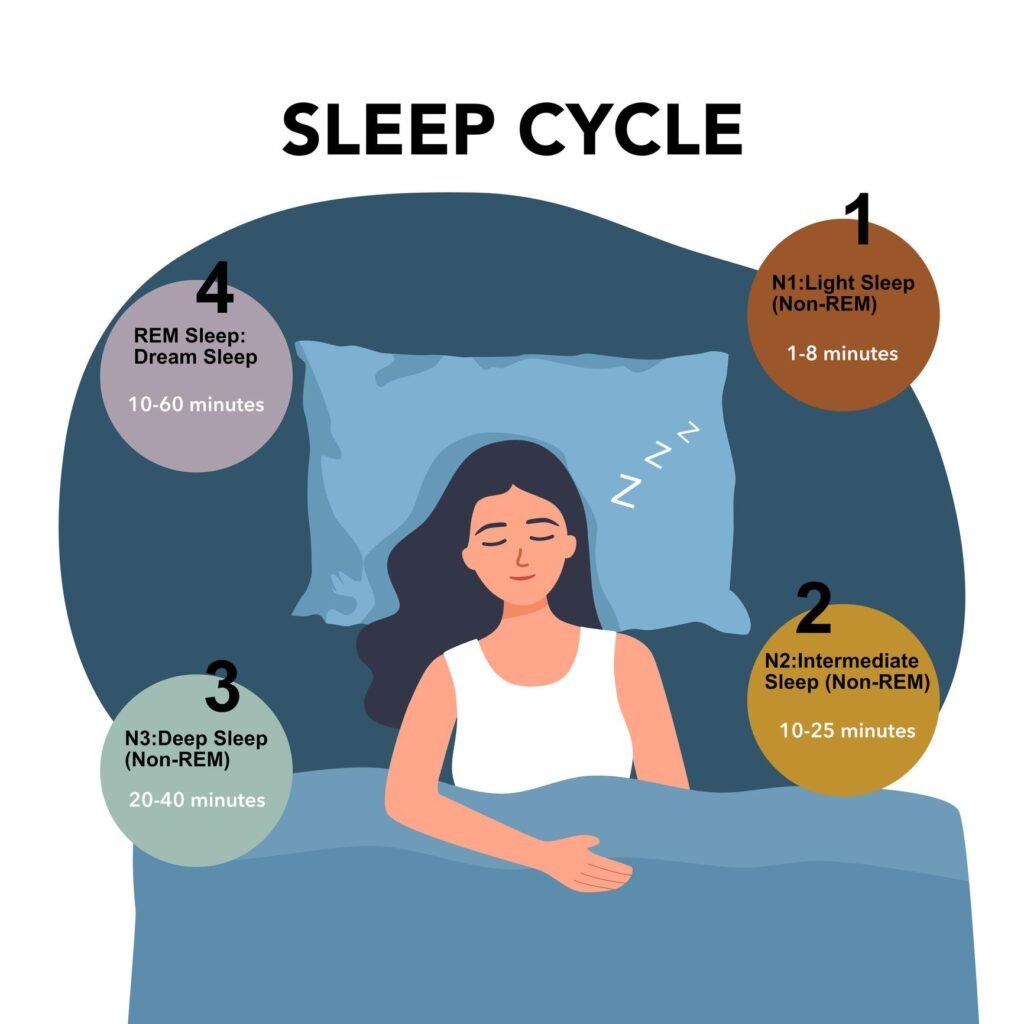
That is because sleep is not simply a period when your body switches off. It is an essential biological process that supports physical recovery, brain function, emotional well-being and everyday performance.
Healthy sleep supports:
- Memory, learning and concentration.
- Emotional balance and mental well-being.
- Immune system function.
- Metabolic and cardiovascular health.
- Physical recovery and energy levels.
According to the US Centers for Disease Control and Prevention (CDC), adults aged 18–60 generally need at least seven hours of sleep each night. Older adults have slightly different recommended ranges.
However, remember that sleep quality matters too. Spending eight hours in bed does not necessarily mean you have enjoyed eight hours of restorative sleep.
The goal is not simply to sleep longer. It is to develop a healthy, consistent sleep pattern.
12 Natural Ways to Sleep Better at Night
Let’s look at practical habits you can gradually introduce into your everyday routine.
You do not need to change everything tonight. Start with two or three habits and build from there.
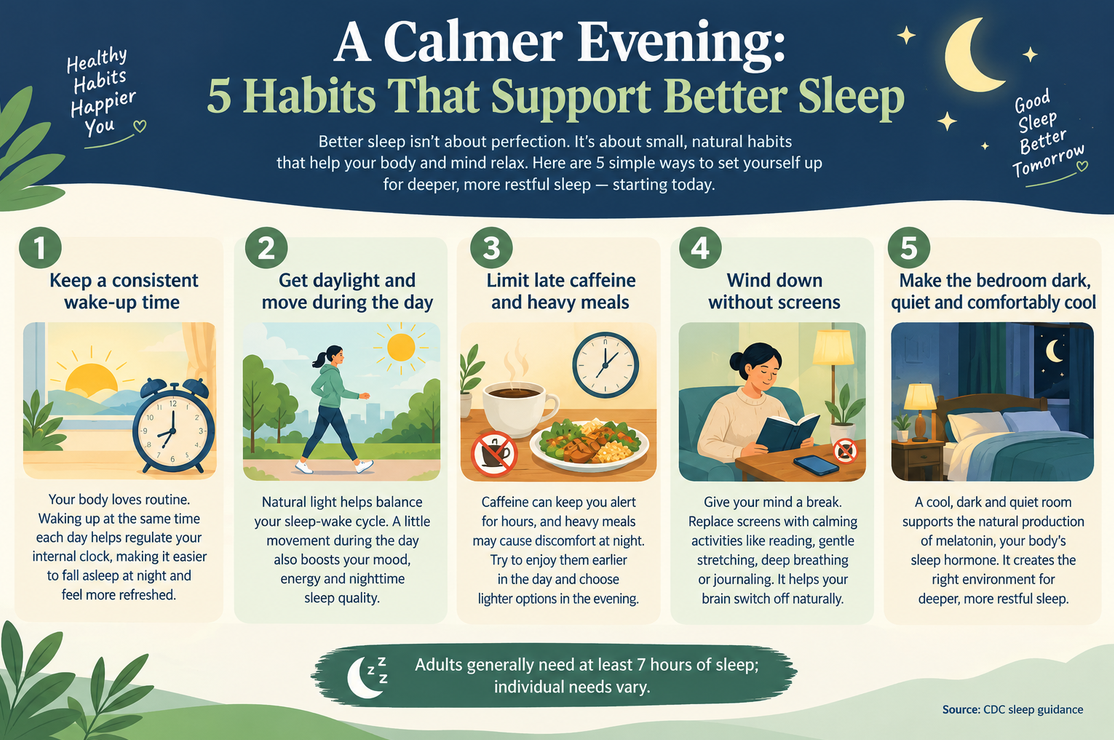
1. Maintain a Consistent Sleep Schedule
One of the simplest ways to improve sleep naturally is to follow a regular sleep and wake-up schedule.
Your body has an internal timing system, commonly called the circadian rhythm. It helps regulate when you feel awake and when you naturally become sleepy.
When you go to bed at midnight one day, 2 AM the next day and 10 PM after that, your body may struggle to maintain a predictable rhythm.
What can you do?
- Try waking up at approximately the same time every morning.
- Maintain a reasonably consistent bedtime.
- Avoid making large changes to your sleep schedule on weekends.
- Give your body time to adjust to a new routine.
For example, if you need to wake up at 7 AM, plan your evening around getting sufficient sleep rather than staying awake unnecessarily.
Consistency is more useful than trying to force yourself to sleep at an exact time.
2. Reduce Screen Time Before Bed
Let’s be honest. Many of us take our phones to bed.
We start by checking one message, then watch a video, scroll through social media and suddenly realise that an hour has passed.
This habit can make it harder to settle down for sleep.
Evening screen use may expose you to light that affects your body clock. Equally importantly, stimulating content, work messages and endless scrolling can keep your mind active.
Try these simple changes:
- Put your phone away approximately 30–60 minutes before bedtime.
- Avoid checking work emails late at night.
- Reduce unnecessary notifications.
- Replace scrolling with reading, gentle music or relaxation exercises.
If you must use your phone, consider reducing screen brightness and choosing less stimulating activities.
Remember, the aim is not to eliminate technology completely. It is to give your mind an opportunity to slow down.
3. Avoid Caffeine Late in the Day
Do you enjoy tea or coffee in the evening?
You may not realise how much it can influence your sleep.
Caffeine is a stimulant that can increase alertness and make it more difficult to fall asleep. Its effects can continue for several hours, although the impact varies between individuals.
Common sources include:
- Coffee.
- Black tea.
- Green tea.
- Energy drinks.
- Cola and other caffeinated beverages.
- Some chocolate products.
Try limiting caffeine in the afternoon and evening.
If you regularly drink tea after dinner, experiment with having it earlier in the day.
You can also choose a caffeine-free alternative, provided it suits your health and dietary requirements.
A useful suggestion: pay attention to your own response. Some people are much more sensitive to caffeine than others.
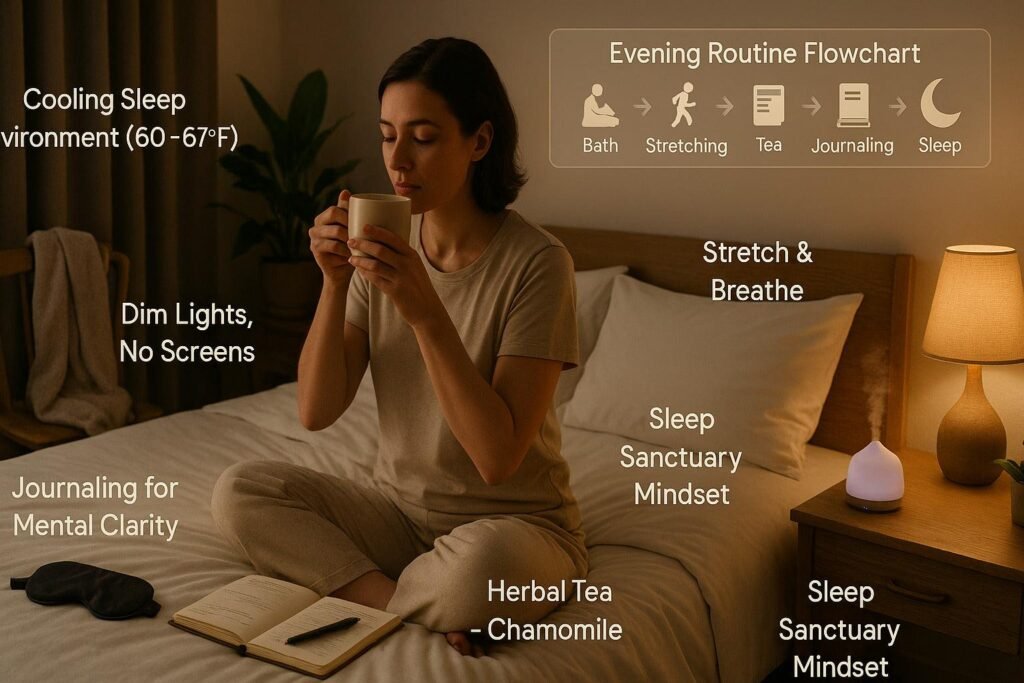
4. Create a Relaxing Bedtime Routine
Imagine finishing your day without immediately moving from work, household responsibilities or phone notifications into bed.
Instead, you give yourself a little time to relax.
That is the idea behind a bedtime routine.
A calming evening routine can help create a clear transition between daytime activities and sleep.
Consider trying:
- Reading a few pages of a book.
- Listening to soft, relaxing music.
- Taking a warm bath or shower.
- Practising gentle stretching.
- Doing slow breathing exercises.
- Writing down tomorrow’s tasks.
You do not need an elaborate wellness routine.
Even 20–30 minutes of quieter activities may help you prepare for sleep.
5. Make Your Bedroom Comfortable for Sleep
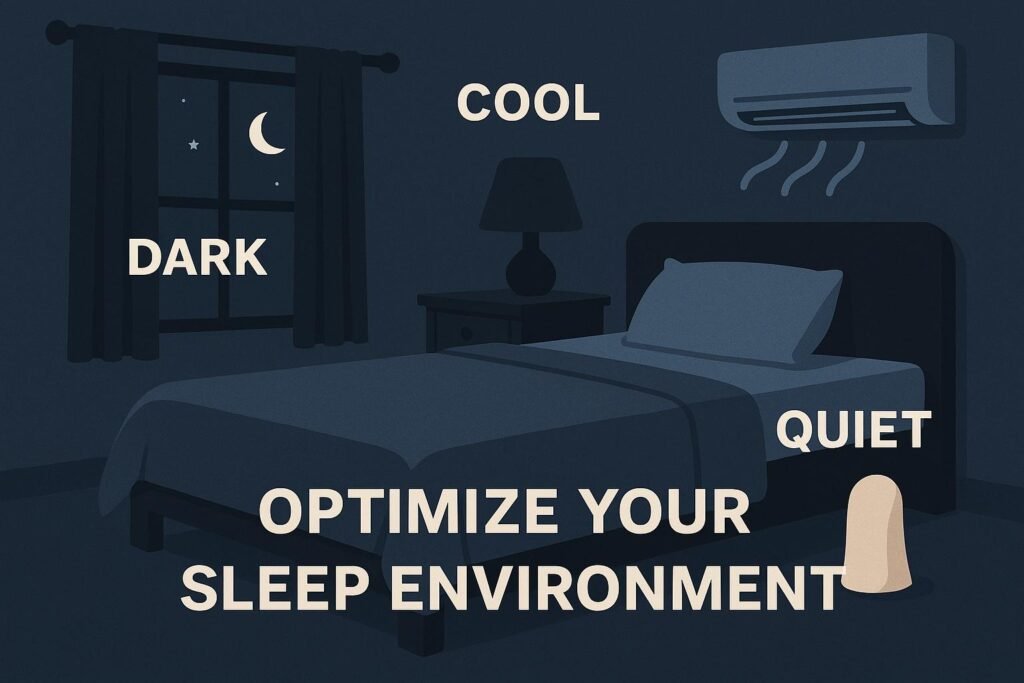
Your sleeping environment matters more than you might think.
A room that is too bright, noisy, hot or uncomfortable may interrupt your rest.
Try creating a bedroom environment that is:
- Dark: use curtains or an eye mask if necessary.
- Quiet: reduce unnecessary noise where possible.
- Comfortable: choose bedding and pillows that support your needs.
- Cool: adjust the temperature to a comfortable level.
- Relaxing: keep unnecessary work-related items away from your sleeping space.
In warmer parts of India, particularly during summer, maintaining a comfortable bedroom temperature can be especially helpful.
You do not need an expensive mattress or smart sleeping equipment to begin improving your sleep environment.
Start with what you already have.
6. Get Natural Daylight During the Day
Your body uses environmental signals, including light and darkness, to help regulate its sleep-wake cycle.
Spending some time outdoors during the day can support a healthier daily rhythm.
You could:
- Take a morning walk.
- Sit near a naturally lit window.
- Spend time outdoors during a break.
- Combine daylight exposure with light physical activity.
Avoid looking directly at the sun.
A short outdoor walk can also help you move your body and take a break from work.
This is a simple habit that supports both general well-being and a healthier daily routine.
7. Exercise Regularly, but Choose the Right Time
Physical activity is beneficial for overall health and may help improve sleep quality.
You do not need to join a gym or follow an intensive workout programme.
Try activities that suit your fitness level:
- Walking.
- Cycling.
- Swimming.
- Yoga.
- Gentle stretching.
- Other forms of moderate physical activity.
The important thing is consistency.
Some people find vigorous exercise close to bedtime makes them feel more alert. If that happens to you, try exercising earlier.
If you have an existing medical condition or physical limitations, discuss an appropriate exercise routine with your healthcare provider.
8. Pay Attention to What You Eat and Drink at Night
Food choices and meal timing can influence how comfortable you feel when going to bed.
A very heavy dinner immediately before sleep may cause discomfort, particularly for people who experience acid reflux or indigestion.
Consider these habits:
- Avoid very heavy meals close to bedtime.
- Try to maintain regular meal timings.
- Stay adequately hydrated during the day.
- Reduce caffeine-containing drinks in the evening.
- Avoid using alcohol as a way to fall asleep.
Although alcohol may make some people feel sleepy initially, it can disrupt sleep later in the night.
There is no single food that guarantees better sleep. A balanced diet and consistent eating habits are more sensible long-term goals than relying on a particular food as a sleep remedy.
9. Manage Stress Before Going to Bed
Sometimes the problem is not that your body is unwilling to sleep. It is that your mind is still busy.
You may be thinking about work, financial responsibilities, family matters, upcoming appointments or something that happened earlier in the day.
When these thoughts continue at bedtime, relaxation can become difficult.
Here are a few things worth trying:
Write down your thoughts. Keep a notebook nearby and write down tasks or worries that you want to address tomorrow.
Practise slow breathing. Breathe comfortably and gently, without forcing or holding your breath.
Try mindfulness. Focus on your breathing or the physical sensations of resting.
Make time for relaxation during the day. Do not leave all your recovery time until bedtime.
If persistent anxiety, stress or low mood is affecting your sleep, professional mental health support may help.
10. Avoid Long or Late Afternoon Naps
A short nap may be refreshing, especially after a tiring morning.
However, long or late afternoon naps can reduce your natural sleepiness at bedtime.
If you need to nap:
- Keep it relatively short.
- Prefer earlier afternoon hours.
- Avoid using naps to compensate regularly for inadequate nighttime sleep.
If you feel excessively sleepy throughout the day despite spending enough time in bed, consider discussing the issue with a healthcare professional.
11. Do Not Force Yourself to Fall Asleep
This is an important point that many people overlook.
When you lie in bed thinking, “I must fall asleep immediately,” you may become increasingly frustrated.
Instead of continuously checking the clock, give yourself permission to relax.
If you remain awake and feel frustrated, consider getting out of bed and sitting somewhere comfortable with dim lighting. Read something quiet or try another relaxing activity.
Return to bed when you feel sleepy.
This approach is related to stimulus control, a behavioural strategy used in evidence-based insomnia treatment.
For people experiencing chronic insomnia, simply following general sleep hygiene advice may not be enough. Structured treatment such as Cognitive Behavioural Therapy for Insomnia (CBT-I) is recommended by the American Academy of Sleep Medicine.
12. Be Careful With Sleeping Pills and Natural Sleep Supplements
When sleep becomes difficult, it is understandable to look for something that provides quick relief.
You may come across advertisements for herbal sleep products, melatonin supplements, gummies and over-the-counter sleeping aids.
But natural does not automatically mean safe or suitable for everyone.
Sleep supplements can have side effects and may interact with medications or existing health conditions.
Similarly, sleeping pills are not appropriate for everyone and may carry risks, including dependence with certain medicines.
Before using a sleep supplement or medication:
- Discuss it with a qualified healthcare professional.
- Check possible interactions with existing medicines.
- Avoid combining sleep products with alcohol.
- Do not take someone else’s prescribed medication.
- Do not stop prescribed medication without medical advice.
For persistent insomnia, ask about evidence-based treatment options rather than relying only on supplements.
Which Foods May Support Better Sleep?
People often ask whether eating certain foods can help them sleep better.
There is no magic food that can cure insomnia. However, a balanced diet can contribute to overall health, and some foods contain nutrients involved in normal bodily processes related to sleep.
Examples include:
| Food | Nutritional value |
|---|---|
| Almonds | Magnesium and healthy fats |
| Bananas | Potassium and vitamin B6 |
| Milk | Protein and tryptophan |
| Oats | Complex carbohydrates and nutrients |
| Pumpkin seeds | Magnesium and zinc |
| Fatty fish | Omega-3 fatty acids and vitamin D |
These foods can form part of a balanced diet, but their presence does not guarantee improved sleep.
A practical evening food routine might include a normal, balanced dinner, avoiding excessive portions and leaving enough time to feel comfortable before going to bed.
If you have diabetes, kidney disease, food allergies or another dietary restriction, choose foods according to your individual nutritional needs.
A Simple Nighttime Routine for Better Sleep
You do not have to follow an identical routine every evening.
Here is an example that you can adapt to your lifestyle.
7:00 PM – Finish your main physical activities
Complete exercise or physically demanding activities earlier where practical.
7:30 PM – Have a balanced dinner
Choose a comfortable portion and avoid very heavy meals close to bedtime.
8:30 PM – Reduce stimulating activities
Start winding down from work, stressful discussions and unnecessary screen use.
9:00 PM – Relax your mind
Read, listen to music, practise gentle stretching or write down tomorrow’s tasks.
9:30 PM – Prepare your bedroom
Adjust the lighting, temperature and bedding to make your sleeping environment comfortable.
10:00 PM – Go to bed when sleepy
Allow yourself enough time for a full night’s rest based on your wake-up schedule.
This is only an example. Your ideal bedtime will depend on your age, work schedule, health and individual sleep requirements.
How Much Sleep Do You Actually Need?
Sleep requirements change throughout life.
The CDC provides the following general recommendations:
| Age group | Recommended daily sleep |
|---|---|
| Newborns, 0–3 months | 14–17 hours |
| Infants, 4–12 months | 12–16 hours, including naps |
| Toddlers, 1–2 years | 11–14 hours, including naps |
| Preschool children, 3–5 years | 10–13 hours, including naps |
| School-age children, 6–12 years | 9–12 hours |
| Teenagers, 13–17 years | 8–10 hours |
| Adults, 18–60 years | 7 or more hours |
| Adults, 61–64 years | 7–9 hours |
| Adults, 65 years and older | 7–8 hours |
These are general recommendations, not individual prescriptions.
If you consistently feel exhausted despite getting an appropriate amount of sleep, sleep quality and possible underlying health issues deserve attention.
Why Do You Keep Waking Up in the Middle of the Night?
Falling asleep is only one part of the picture.
Some people fall asleep easily but wake up several times during the night.
There can be different reasons, including:
- Stress and anxiety.
- Noise, light or an uncomfortable bedroom.
- Caffeine or alcohol consumption.
- Pain or physical discomfort.
- Frequent urination.
- Certain medications.
- Sleep disorders such as obstructive sleep apnoea.
Occasional nighttime waking does not necessarily mean you have a sleep disorder.
However, frequent interruptions that leave you tired during the day should not be ignored.
One condition worth understanding is sleep apnoea.
People with sleep apnoea may experience loud snoring, breathing interruptions, gasping or choking during sleep and excessive daytime tiredness.
If you or someone in your family notices these symptoms, seek medical assessment. A healthcare professional may recommend further evaluation or a sleep study.
When Should You See a Doctor About Sleep Problems?
Natural sleep habits are a useful starting point, but they are not a replacement for medical assessment when symptoms persist.
Consider consulting a healthcare professional if:
- You regularly struggle to fall asleep or stay asleep.
- Poor sleep is affecting your work, studies or relationships.
- You feel excessively sleepy during the day.
- You experience persistent anxiety or low mood.
- You regularly wake up gasping or choking.
- Someone notices that your breathing stops during sleep.
- Your sleep problems continue despite changes to your routine.
Chronic insomnia is generally associated with sleep difficulties occurring at least three nights a week for three months or longer, alongside daytime consequences.
One important evidence-based treatment is Cognitive Behavioural Therapy for Insomnia (CBT-I).
CBT-I helps people understand and change thoughts and behaviours that contribute to persistent insomnia. It is not simply general advice about avoiding coffee or switching off the phone.
If your sleep problems are persistent, ask your doctor whether CBT-I or a sleep specialist assessment may be appropriate.
A Simple 7-Day Better Sleep Challenge
Instead of trying to change your entire lifestyle overnight, why not start with one small improvement each day?
Day 1: Choose a consistent wake-up time.
Day 2: Avoid caffeine late in the day.
Day 3: Spend some time outdoors in natural daylight.
Day 4: Reduce unnecessary screen time before bed.
Day 5: Create a comfortable, quiet and dark sleeping environment.
Day 6: Introduce a relaxing evening activity.
Day 7: Review your sleep habits and identify which changes helped.
Keep a simple sleep diary during the week. Record your bedtime, approximate wake-up time, nighttime awakenings, caffeine intake and how refreshed you feel in the morning.
You may start noticing patterns that were previously easy to overlook.
Remember, seven days is an opportunity to observe your habits, not a guaranteed cure for insomnia.
Frequently Asked Questions About Sleeping Better Naturally
1. What is the fastest natural way to fall asleep?
There is no guaranteed instant method. A quiet environment, regular sleep schedule, reduced evening stimulation and relaxation exercises may help. If you remain awake and frustrated, avoid forcing sleep.
2. How can I sleep better without taking sleeping pills?
Start with consistent wake-up times, daytime physical activity, appropriate caffeine timing, a comfortable bedroom and a relaxing evening routine. If insomnia persists, discuss evidence-based treatments such as CBT-I with a healthcare professional.
3. Which foods are good before bedtime?
A balanced diet is more important than a particular sleep-promoting food. Foods such as milk, oats, bananas and almonds can be part of a healthy diet, but none is a proven cure for insomnia.
4. Does drinking milk before bed improve sleep?
Milk contains nutrients including protein and tryptophan. Some people find a warm drink relaxing, but scientific evidence does not establish that drinking milk alone reliably treats insomnia.
5. Why do I wake up at 3 AM every night?
There is no single explanation for waking at a particular time. Stress, environmental disturbances, medications, physical discomfort and sleep disorders may all contribute. Persistent symptoms deserve medical evaluation.
6. Is seven hours of sleep enough?
For most adults aged 18–60, seven hours is the general minimum recommendation. Some people need more. Sleep quality, daytime alertness and individual health also matter.
7. Can stress and anxiety cause sleepless nights?
Yes. Stress and anxiety can make it difficult to relax, fall asleep or remain asleep. Relaxation techniques, daytime stress management and professional support may help.
8. Is it normal to wake up several times during the night?
Brief awakenings can occur naturally. However, frequent disruptions accompanied by tiredness, loud snoring, gasping or breathing interruptions should be discussed with a healthcare professional.
9. Does exercise help improve sleep quality?
Regular physical activity can support better sleep and overall health. Choose activities suitable for your fitness level and adjust exercise timing if vigorous activity close to bedtime makes you feel more alert.
10. When should I seek professional help for insomnia?
Seek medical advice if sleep problems continue for months, affect your daily life or occur alongside concerning symptoms such as excessive daytime sleepiness or breathing difficulties during sleep.
Final Thoughts: Better Sleep Begins With Small Changes
Good sleep is not a luxury. It is an important part of looking after your health.
You do not need to follow a complicated routine, purchase expensive sleep products or change everything about your lifestyle in one day.
Start with something manageable.
Wake up at a consistent time. Reduce late-night caffeine. Spend some time outdoors. Give yourself a little breathing space before bedtime. Make your bedroom comfortable.
Most importantly, listen to your body.
If you continue struggling with sleep despite making healthy changes, do not hesitate to seek professional advice. Persistent sleep problems sometimes need more than lifestyle adjustments.
At Madre Healthcare, we believe that informed healthcare decisions begin with awareness, guidance and access to appropriate support.
Your journey towards better health can start with one small, positive change tonight.
Sleep well, take care of yourself and give your body the rest it deserves.
Medical Disclaimer
This article is intended for general health education and awareness. It does not replace professional medical advice, diagnosis or treatment. Sleep requirements and treatment options vary between individuals. Consult a qualified healthcare professional if you experience persistent sleep difficulties, suspected sleep apnoea or other concerning symptoms.
References and Further Reading
- CDC – About Sleep
- NHS – Insomnia
- NHS – How to Fall Asleep Faster and Sleep Better
- NHLBI – Sleep Apnoea Symptoms
- American Academy of Sleep Medicine – Behavioural and Psychological Treatments for Chronic Insomnia
- NIH – Insomnia
Content prepared for general health education by the Madre Healthcare editorial team. Clinical review should be completed by a qualified healthcare professional before publication.